How Intelligent Technology Is Reshaping Modern Living
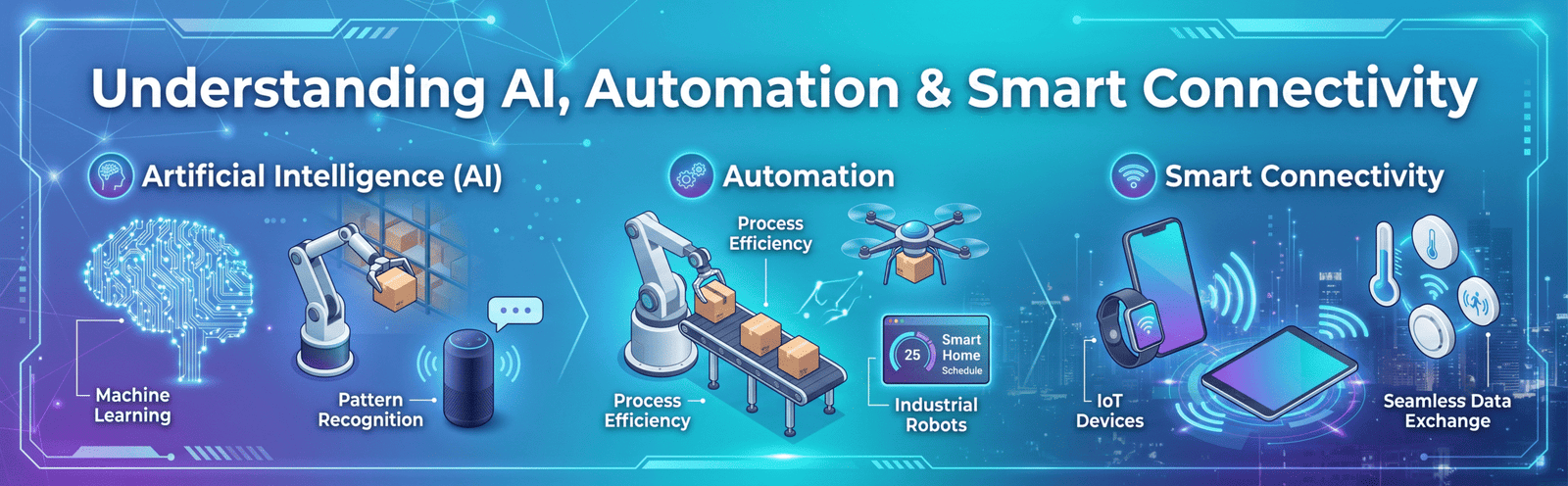
Modern smart technology is powered by three major forces working together behind the scenes:
- Artificial Intelligence (AI)
- Automation
- Smart Connectivity
These technologies are transforming ordinary devices into intelligent systems capable of learning, responding, communicating, and automating tasks with minimal human effort.
From smart homes and wearable health monitors to AI-powered security cameras and connected kitchen appliances, modern smart devices are becoming increasingly intelligent and interconnected.
Understanding how these technologies work helps consumers make smarter buying decisions and build more effective smart ecosystems.
What Is Artificial Intelligence (AI)?
Artificial intelligence refers to technology that allows devices and software to simulate human-like intelligence.
AI enables devices to:
- Learn patterns
- Analyze information
- Make decisions
- Predict behaviors
- Recognize speech
- Detect movement
- Improve performance over time
Instead of simply following fixed commands, AI-powered devices can adapt and respond intelligently to changing situations.
Examples of AI in Everyday Smart Devices
AI is already integrated into many products people use daily.
Examples include:
AI Smart Security Cameras
Modern security cameras can:
- Detect humans separately from animals
- Identify suspicious activity
- Recognize faces
- Reduce false motion alerts
- Automatically track movement
This improves both security and convenience.
AI Smart Watches & Wearables
AI-powered health wearables can:
- Monitor heart rate patterns
- Analyze sleep quality
- Detect irregular activity
- Measure stress levels
- Recommend recovery improvements
Some advanced devices may even help identify early health concerns.
AI Voice Assistants
Voice assistants like:
- Amazon Alexa
- Google Assistant
- Apple Siri
use AI to:
- Understand speech
- Respond to commands
- Control smart homes
- Answer questions
- Automate routines
The more users interact with them, the smarter and more personalized they become.
AI Smart Thermostats
Modern thermostats can:
- Learn temperature preferences
- Detect occupancy patterns
- Automatically adjust climate settings
- Reduce energy consumption
- Optimize comfort levels
This combination of AI and automation can significantly improve home efficiency.
AI Is Making Devices More Personalized
One of AI’s greatest strengths is personalization.
AI systems can analyze user behavior to provide:
- Smarter recommendations
- Personalized automation
- Predictive adjustments
- Adaptive performance
Examples include:
- Streaming platforms recommending content
- Smart lights adjusting brightness automatically
- AI keyboards predicting text
- Health wearables tailoring fitness insights
The goal is to make technology feel more intuitive and natural.
What Is Automation?
Automation allows devices to perform tasks automatically without constant human control.
Instead of manually operating devices every time, automation systems can:
- Trigger actions
- Follow schedules
- Respond to conditions
- Coordinate multiple devices
Automation is one of the core foundations of modern smart living.
Examples of Smart Automation
Home Automation
Smart homes can automate:
- Lighting
- Climate control
- Security systems
- Entertainment devices
- Appliances
For example:
- Lights may turn on automatically at sunset.
- Doors may lock automatically at bedtime.
- Thermostats may adjust while homeowners are away.
- Security cameras may activate when motion is detected.
Health Automation
Health devices can automate:
- Medication reminders
- Sleep tracking
- Fitness monitoring
- Hydration alerts
- Emergency notifications
This reduces manual effort while improving health awareness.
Travel Automation
Travel technology can automate:
- GPS tracking
- Route optimization
- Device charging management
- Language translation
- Security alerts
Automation improves convenience and reduces stress during travel.
Productivity Automation
AI productivity tools can automate:
- Meeting transcription
- Voice note organization
- Scheduling reminders
- Workflow management
- Smart note summarization
This helps improve efficiency and time management.
Why Automation Matters
Automation helps users:
- Save time
- Reduce stress
- Increase convenience
- Improve efficiency
- Lower energy costs
- Enhance safety
- Simplify routines
Instead of constantly managing technology manually, users can allow intelligent systems to handle repetitive tasks automatically.
What Is Smart Connectivity?
Smart connectivity allows devices to communicate with:
- Smartphones
- WiFi networks
- Cloud systems
- Voice assistants
- Other smart devices
Connectivity transforms individual gadgets into interconnected ecosystems.
Without connectivity, most smart devices would lose many of their advanced capabilities.
Common Smart Connectivity Technologies
Modern smart devices rely on several connectivity standards.
WiFi Connectivity
WiFi is the most common smart device connection type.
WiFi allows devices to:
- Access cloud services
- Send mobile alerts
- Stream video
- Enable remote access
- Receive software updates
Examples:
- Security cameras
- Smart speakers
- Smart TVs
- Smart thermostats
Bluetooth Connectivity
Bluetooth is commonly used for:
- Wearables
- Wireless headphones
- Smart watches
- Smart rings
- Portable devices
Bluetooth usually provides:
- Short-range connectivity
- Low power usage
- Quick device pairing
Zigbee & Z-Wave
These technologies are often used in:
- Smart home automation
- Lighting systems
- Sensors
- Home hubs
Advantages include:
- Lower energy usage
- Reliable device communication
- Better smart home scalability
Matter Smart Home Standard
Matter is a newer smart home standard designed to improve compatibility across brands.
Matter helps devices from different ecosystems work together more easily.
This reduces compatibility frustrations for consumers.
Cloud Connectivity
Many smart devices rely on cloud services for:
- AI processing
- Data storage
- Remote access
- Software updates
- Device synchronization
Cloud systems enable users to control devices from anywhere using smartphones or computers.
How Smart Ecosystems Work Together
One of the most powerful aspects of smart technology is ecosystem integration.
A smart ecosystem allows multiple devices to work together seamlessly.
Examples include:
- Smart speakers controlling lights
- Security cameras triggering alarms
- Motion sensors activating lighting
- Smart locks communicating with cameras
- Thermostats responding to occupancy sensors
This creates a connected intelligent environment.
Popular Smart Ecosystems
Amazon Alexa Ecosystem
Popular for:
- Voice control
- Smart home automation
- Wide device compatibility
- Easy smart routines
Common Alexa-compatible devices include:
- Smart lights
- Cameras
- Thermostats
- Smart plugs
- Doorbells
Google Home Ecosystem
Known for:
- Strong AI integration
- Google Assistant intelligence
- Android compatibility
- Smart automation
Apple HomeKit Ecosystem
Popular among Apple users because of:
- Strong privacy focus
- Smooth iPhone integration
- Premium ecosystem experience
Samsung SmartThings
Known for:
- Broad smart device compatibility
- Home automation flexibility
- Smart appliance integration
Why Compatibility Matters
Compatibility problems are one of the biggest smart technology frustrations.
Before buying devices, consumers should check:
- Voice assistant support
- Smartphone compatibility
- Smart home standards
- Automation support
- App integration
Building compatible ecosystems creates:
- Better automation
- Easier setup
- Smoother device communication
- Better long-term experiences
The Role of Sensors in Smart Technology
Many smart devices depend on sensors to gather information.
Examples include:
- Motion sensors
- Temperature sensors
- Light sensors
- Heart rate sensors
- GPS sensors
- Air quality sensors
- Water leak sensors
Sensors allow devices to respond intelligently to environments and user activity.
AI + Automation + Connectivity = Smart Living
Modern smart technology works best when AI, automation, and connectivity operate together.
For example:
A smart home system may:
- Detect motion using sensors
- Analyze activity using AI
- Trigger lighting automatically
- Send mobile notifications through WiFi
- Activate cameras
- Lock doors automatically
This combination creates intelligent responsive environments.
The Future of Smart Technology
Smart technology continues evolving rapidly.
Future developments may include:
- AI household robots
- Predictive smart homes
- Advanced wearable diagnostics
- Smarter energy automation
- AI healthcare assistants
- Fully integrated smart cities
- Augmented reality smart glasses
- Autonomous home management systems
As AI improves, smart devices will become increasingly intelligent, proactive, and personalized.
Smart Technology Is Becoming Part of Everyday Life
Connected technology is no longer limited to technology enthusiasts.
Smart systems are increasingly shaping:
- Homes
- Healthcare
- Transportation
- Communication
- Security
- Entertainment
- Productivity
- Personal wellness
As modern life becomes more connected, understanding AI, automation, and smart connectivity becomes increasingly important for consumers.
Why Understanding Smart Technology Matters
Consumers who understand smart technology can:
- Make better buying decisions
- Build smarter ecosystems
- Improve automation
- Avoid compatibility issues
- Protect privacy
- Maximize device value
- Create more efficient lifestyles
Technology works best when users understand both its benefits and limitations.
SmartDigitals Helps Simplify Modern Technology
The world of smart devices can sometimes feel overwhelming because of:
- Rapid innovation
- Thousands of products
- Technical terminology
- Confusing compatibility systems
- AI marketing hype
SmartDigitals exists to simplify that experience by helping readers:
- Understand smart technology
- Learn how devices work
- Discover useful innovations
- Compare smart ecosystems
- Find practical devices worth buying
As connected living continues expanding, understanding AI, automation, and smart connectivity will become essential for navigating the future of modern life.