
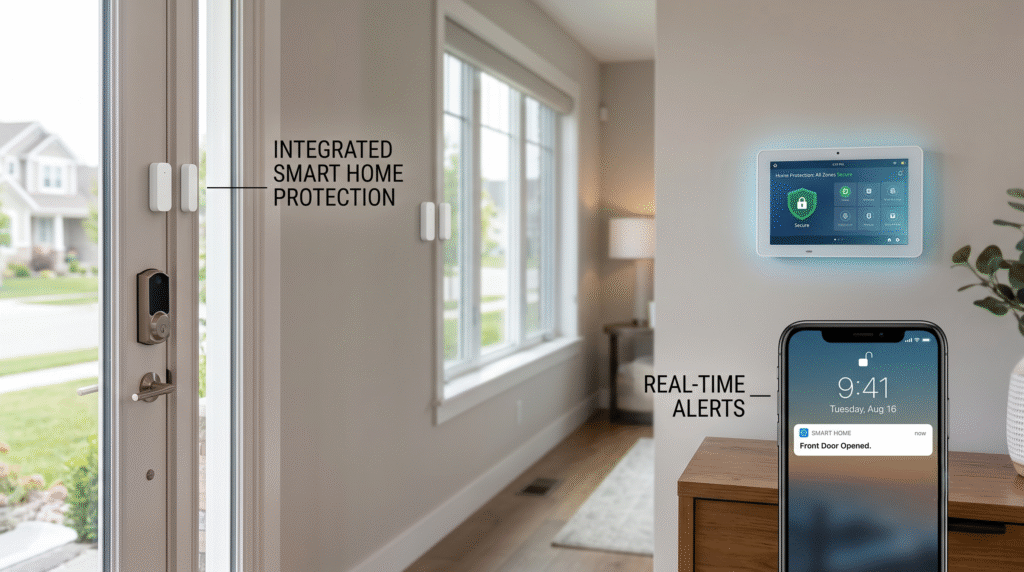
Intelligent Entry Detection, Real-Time Alerts & Smarter Home Security
Smart door and window sensors are among the simplest yet most important smart home security devices available today. These compact intelligent sensors help homeowners monitor entry points in real time, receive instant alerts, automate security responses, and strengthen overall home protection.
While security cameras and alarms often receive the most attention, door and window sensors serve as the frontline detection system of many modern smart home ecosystems.
These devices can instantly notify users whenever:
- A door opens unexpectedly
- A window is accessed
- An entry point is breached
- Unauthorized access occurs
- Children leave restricted areas
- Garage doors are opened
- Cabinets or safes are accessed
Modern smart sensors combine:
- Wireless connectivity
- Smartphone notifications
- Automation triggers
- Voice assistant integration
- AI-powered smart home coordination
They are affordable, easy to install, energy efficient, and highly expandable, making them one of the best entry-level smart security investments for both homeowners and renters.
What Are Smart Door & Window Sensors?
Smart door and window sensors are small wireless devices designed to detect when doors, windows, cabinets, gates, safes, or other entry points are opened or closed.
Most systems use two components:
- A sensor unit
- A magnetic contact piece
When the connection between the two parts breaks, the system detects movement and sends alerts or triggers automated actions.
Modern sensors often connect through:
- WiFi
- Zigbee
- Z-Wave
- Bluetooth
- Smart home hubs
They can communicate with:
- Smartphones
- Security systems
- Smart speakers
- Cameras
- Smart lighting
- Alarm systems
Why Smart Sensors Matter in Modern Home Security
Many intrusions begin through:
- Front doors
- Back doors
- Windows
- Garage entries
- Sliding glass doors
Smart sensors provide immediate awareness when these access points are opened unexpectedly.
Unlike cameras that require visual monitoring, sensors offer instant direct detection of entry activity.
They are especially valuable because they:
- Operate quietly
- Consume little power
- Trigger automation instantly
- Improve layered home security
Door and window sensors are often the foundation of larger smart security ecosystems.
Key Features of Smart Door & Window Sensors
Instant Smartphone Alerts
When activity is detected, users can receive:
- Push notifications
- Security alerts
- Alarm warnings
- Entry notifications
This allows homeowners to respond quickly even while away.
Smart Home Automation
Sensors can trigger:
- Smart lighting
- Alarm sirens
- Camera recording
- Voice assistant announcements
- Smart lock automation
For example:
Opening a front door may automatically:
- Turn on hallway lights
- Trigger security cameras
- Send phone notifications
Voice Assistant Integration
Many sensors work with:
- Amazon Alexa
- Google Assistant
- Apple HomeKit
Users can:
- Ask whether doors are open
- Receive spoken alerts
- Automate security routines
Activity History Tracking
Most apps allow users to review:
- Door opening times
- Entry history
- Activity logs
- Security events
This can improve household awareness and monitoring.
Expandable Ecosystems
Smart sensors often integrate with:
- Cameras
- Motion detectors
- Smart locks
- Flood sensors
- Thermostats
- Security hubs
This allows scalable home protection systems.
Common Uses for Smart Door & Window Sensors
Front & Back Door Security
Protecting primary entry points remains the most common use.
Window Intrusion Detection
Sensors can help monitor:
- Ground-floor windows
- Basement windows
- Sliding windows
- Vulnerable entry areas
Garage Monitoring
Garage doors are common security weak points.
Smart sensors improve awareness of:
- Open garage doors
- Unauthorized access
- Forgotten closures
Child Safety Monitoring
Parents may use sensors to monitor:
- Nursery doors
- Restricted rooms
- Medicine cabinets
- Pool access gates
Elderly Care Monitoring
Caregivers may receive alerts when:
- Seniors leave rooms unexpectedly
- Exterior doors open late at night
- Certain restricted areas are accessed
Vacation Property Monitoring
Remote property owners can monitor:
- Unexpected entry activity
- Maintenance visits
- Property access while traveling
Benefits of Smart Door & Window Sensors
Affordable Home Security
Compared to many advanced security systems, sensors are:
- Budget friendly
- Easy to expand
- Cost effective
Simple Installation
Most wireless sensors:
- Require no drilling
- Use adhesive mounting
- Install within minutes
- Support DIY setup
Improved Security Awareness
Users instantly know when entry points open unexpectedly.
Energy Efficient Operation
Most sensors use:
- Small batteries
- Low-power communication
- Long battery life
Some batteries may last several years.
Strong Automation Potential
Sensors enhance:
- Home automation
- Smart routines
- Intelligent lighting
- Coordinated security responses
Types of Smart Entry Sensors
Basic Open/Close Sensors
Detect:
- Door opening
- Window movement
- Access activity
Multi-Purpose Contact Sensors
Can monitor:
- Cabinets
- Drawers
- Safes
- Refrigerators
- Mailboxes
Vibration Sensors
Detect:
- Glass vibration
- Forced entry attempts
- Physical tampering
Tilt Sensors
Used for:
- Garage doors
- Gates
- Slanted entry systems
5 Best Smart Sensor Brands Worth Considering
1. Ring Alarm Sensors
Popular for:
- Strong Alexa integration
- Reliable alerts
- Easy smart home expansion
Best for:
- Ring ecosystem users
2. Aqara
Known for:
- Affordable pricing
- Strong automation support
- Apple HomeKit compatibility
- Zigbee efficiency
Best for:
- Smart home automation enthusiasts
3. SimpliSafe
Praised for:
- Reliable security systems
- Easy setup
- Strong monitoring support
Best for:
- Complete home security systems
4. Samsung SmartThings
Well known for:
- Broad compatibility
- Strong automation routines
- Flexible smart home integration
Best for:
- SmartThings ecosystem users
5. Eufy Security
Recognized for:
- Privacy-friendly systems
- Local storage integration
- Reliable wireless performance
Best for:
- Privacy-conscious households
Important Buying Considerations
Connectivity Type
Different sensors use:
- WiFi
- Zigbee
- Z-Wave
- Bluetooth
Hub-based systems often provide:
- Better battery life
- More reliable automation
- Stronger smart home integration
Always check support for:
- Alexa
- Google Home
- Apple HomeKit
- SmartThings
- Matter compatibility
Battery Life
Look for:
- Long-lasting batteries
- Low-power operation
- Easy battery replacement
Installation Flexibility
Consider:
- Adhesive mounting
- Compact size
- Sensor placement options
Notification Speed
Fast alerts are critical for effective security monitoring.
Pros of Smart Door & Window Sensors
Pros
- Affordable security upgrades
- Easy installation
- Instant alerts
- Expandable ecosystems
- Energy efficient
- Strong automation support
- Improves layered security
- Beginner friendly
Cons of Smart Door & Window Sensors
Cons
- Dependence on wireless connectivity
- Battery replacement needs
- Possible false alerts
- Limited standalone protection
- Some systems require hubs
Common Mistakes Buyers Make
Ignoring Compatibility
Not all sensors work across all ecosystems.
Always verify:
- Hub support
- Voice assistant compatibility
- Automation integration
Poor Sensor Placement
Improper alignment may cause:
- Missed alerts
- False notifications
- Connectivity issues
Forgetting Battery Maintenance
Low batteries may reduce reliability.
Regular monitoring is important.
Using Sensors Without Layered Security
Sensors work best alongside:
- Cameras
- Smart locks
- Alarm systems
- Lighting automation
Privacy & Security Tips
To improve security:
- Use strong app passwords
- Enable two-factor authentication
- Update firmware regularly
- Secure WiFi networks
- Buy trusted brands
Cybersecurity is essential for connected home devices.
Future Trends in Smart Entry Sensors
Future sensor technology may include:
- AI behavior analysis
- Predictive intrusion detection
- Advanced glass-break monitoring
- Improved battery efficiency
- Matter universal compatibility
- Smarter automation routines
Smart sensors will continue becoming more intelligent and integrated into broader smart ecosystems.
Who Should Buy Smart Door & Window Sensors?
These devices are ideal for:
- Homeowners
- Apartment residents
- Families
- Renters
- Vacation property owners
- Smart home beginners
- Security-conscious households
Related Smart Home Devices
Smart entry sensors work especially well with:
- Smart security cameras
- Smart locks
- AI video doorbells
- Motion detectors
- Smart floodlights
- Alarm systems
- Home automation hubs
Together, they create layered intelligent home protection systems.
Final Verdict
Smart door and window sensors are among the most practical and affordable smart home security upgrades available today.
They provide:
- Instant awareness
- Real-time alerts
- Entry monitoring
- Automation support
- Expandable security integration
Whether protecting homes, monitoring children, securing apartments, improving smart automation, or building complete home protection ecosystems, smart sensors offer powerful security benefits with simple installation and everyday convenience.
As smart homes continue evolving, intelligent entry detection systems will remain essential foundations of connected home security.